
Demilec Vapor Barrier Installation: The Ventura Owner’s Guide
Demilec vapor barrier installation in Ventura typically runs $1,200 to $2,800 installed, depending on attic square footage, access, and whether old barrier material needs removal first. We stock Demilec-compatible vapor barrier on our trucks and can usually get the job done same day or next morning. Most Ventura homeowners discover the problem the hard way: a musty smell that won’t quit, condensation beading on attic sheathing, or insulation that’s gone flat and damp in patches where moisture has been working through.
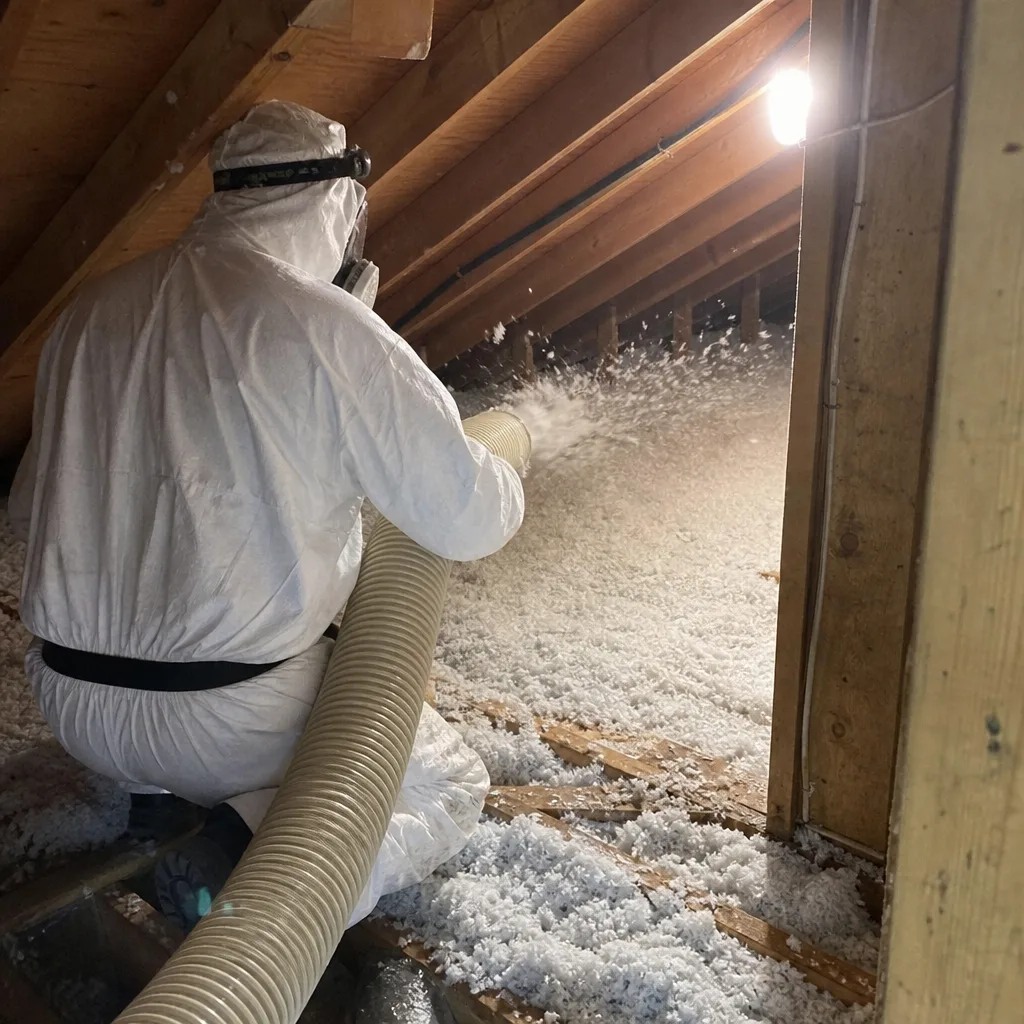
We’re Alden Insulation Ventura, an independent service provider. We install and service Demilec products but we’re not affiliated with Demilec directly. What that means for you: we tell you straight what’s failing, what it costs to fix, and we put the price in writing before a tool comes off the truck.
Which Demilec Models This Applies To
This guide covers vapor barrier installation alongside Demilec’s open-cell and closed-cell spray foam lines, including Heatlok HFO Pro, Heatlok Soya, Sealection 500, and Agribalance. The vapor barrier itself is not the foam, that’s the first thing to understand. In Ventura attics and crawlspaces, the barrier is typically a separate polyethylene sheet or a vapor-retarder coating installed between the conditioned space and the foam, or on the warm side of the assembly.
Here’s the compatibility gotcha most owners miss: Demilec’s closed-cell foams act as their own vapor retarder at certain thicknesses, so an additional barrier layer may be redundant or even counterproductive if it’s put on the wrong side. We’ve pulled apart older Westside Ventura attics where a well-meaning handyman stapled poly sheeting directly under the roof deck, trapped moisture against the sheathing, and caused rot within three years. That’s not a foam failure. That’s a detailing failure.
Finding the right specification starts with the product label on the installed foam, if it’s visible. Demilec prints the product name, lot number, and application date. If the label is buried or illegible, we check the foam’s density and cell structure. Closed-cell feels rigid and dense; open-cell is softer and spongier. That tells us whether a supplementary barrier belongs at all, and if so, what class of vapor retarder matches the assembly.
We install genuine Demilec products and quality aftermarket equivalents where appropriate. For barrier sheet goods, we also stock Reflectix for specific radiant-barrier applications. The decision between OEM and aftermarket comes down to your existing system’s age and the manufacturer spec on the current foam batch, not a blanket rule.
Signs Your Demilec Vapor Barrier Installation Is Failing
- Musty or “wet attic” smell upstairs. Moisture is moving through the barrier and saturating insulation or wood. We find this most often in Ventura homes near the beach where marine air pushes humidity against the building envelope for months at a time. Ventura’s cool nights and warm days create a condensation cycle the barrier is supposed to interrupt.
- Visible condensation on attic sheathing or roof nails. Water droplets or rusted nails mean warm, moist air from the living space is reaching the cold side of the assembly. The barrier has a hole, a seam failure, or it wasn’t sealed around penetrations like recessed lights and vent pipes.
- Insulation that feels damp or looks flattened. Wet fiberglass loses R-value fast and compresses under its own weight. If you can press into the insulation and it stays indented, moisture has compromised it.
- Drywall staining or peeling paint on upper-floor ceilings. Moisture that makes it past the barrier eventually shows up inside. This is the late-stage signal, usually meaning water has been moving for a season or longer.
- Higher cooling bills with no other explanation. A failed vapor barrier lets humidity into the attic, and your HVAC works harder to condition the same space. We’ve measured attic humidity over 70% in Ventura homes where the barrier had failed at a single unsealed seam.
Replacement Cost & What’s Included
For a typical 1,500 to 2,500 square foot Ventura home, Demilec vapor barrier replacement runs between $1,200 and $2,800 installed. That includes removal of the old barrier material, inspection of the underlying foam and sheathing, installation of the new barrier with sealed seams and penetration boots, and disposal. Smaller jobs like a single room or crawlspace section start around $600. Larger homes with complex rooflines or steep pitches can push past $3,500.
| Scope | Typical Ventura Price |
|---|---|
| Crawlspace only (under 1,000 sq ft) | $600 – $1,100 |
| Attic, standard accessible (1,500 – 2,500 sq ft) | $1,200 – $2,800 |
| Attic, complex access or steep pitch | $2,800 – $3,800+ |
| Barrier plus insulation remediation | Add $900 – $2,200 |
The price is written before we start. Not an estimate that moves at the door. A written price. And the work carries our 365-Day Done Right Promise: if the barrier fails within a year, we come back and make it right at no charge, including a free second visit. That’s The Garrison Standard, and it’s non-negotiable whatever the job.
DIY or Call Us?
Vapor barrier work is not dangerous in the way garage door springs or electrical panels are, but it will eat a weekend and it’s easy to get wrong in ways you won’t discover for two years. You can safely inspect your attic: look for wet insulation, condensation on nails, gaps around penetrations. You can seal small tears with vapor barrier tape. But if the failure is at the assembly level, if insulation is wet, if sheathing is stained or soft, you’re past what a roll of tape fixes.
The common DIY failure isn’t the sheet itself. It’s the detailing: seams not lapped properly, penetrations left unsealed, the barrier installed on the wrong side of the assembly. In Ventura’s coastal humidity, those small errors become moisture pumps. Our crew backgrounds checked and uniformed, arrives inside the scheduled window and handles the whole job, including pulling and disposing of the old material. If you’d rather not spend Saturday in fiberglass dust, call (341) 895-7513 and we’ll quote it straight.
FAQs
A properly installed vapor barrier in a Ventura attic or crawlspace lasts 20 to 30 years, with the real failure points being seams and penetrations rather than the sheet material itself. Coastal humidity accelerates aging at unsealed edges. Call (341) 895-7513 for an inspection if your barrier is over 15 years old.
Yes, if the failure is localized, such as a single torn seam or an unsealed penetration, and the surrounding material is still intact and dry. If moisture has reached the insulation or sheathing, we recommend replacement rather than a patch that leaves compromised material in place. Call us and we’ll tell you which situation you have.
Most single-family Ventura homes take four to eight hours, including removal of the old barrier and cleanup. Crawlspace-only jobs can run two to four hours. Houses with complex rooflines or multiple attic zones may need a second day.
We stock Demilec-compatible polyethylene vapor barrier in standard widths and the tapes and adhesives for seam sealing on our trucks, so most Ventura jobs go same day. Unusual materials or specialty products may take a couple of days to bring in.
If you’re seeing moisture in your Ventura attic or crawlspace, or your energy bills are climbing without explanation, call (341) 895-7513. We’ll inspect it, quote it in writing, and stand behind the work for 365 days. Measure the house, match the material, do the job right the first time.
Written by Bryce Holloway, Owner, Alden Insulation Ventura at Alden Insulation Ventura, serving Ventura and nearby areas.