
Rockwool Radiant Barrier Installation: The Ventura Owner’s Guide
We stock and install Rockwool-compatible radiant barrier in Ventura, with most installations running $3.25 to $4.75 per square foot including materials and labor. A typical 1,200-square-foot attic takes our crew half a day, so same-week scheduling is standard and same-day is often possible when you call before 10 a.m. Most Ventura homeowners discover the problem during a heat wave: the upstairs bedrooms won’t hold a set temperature, the air conditioner runs constantly, and touching the ceiling feels like placing a hand on a sun-warmed sidewalk. That’s the moment they climb into the attic and see the old barrier sagging, torn, or wrinkled across the insulation.
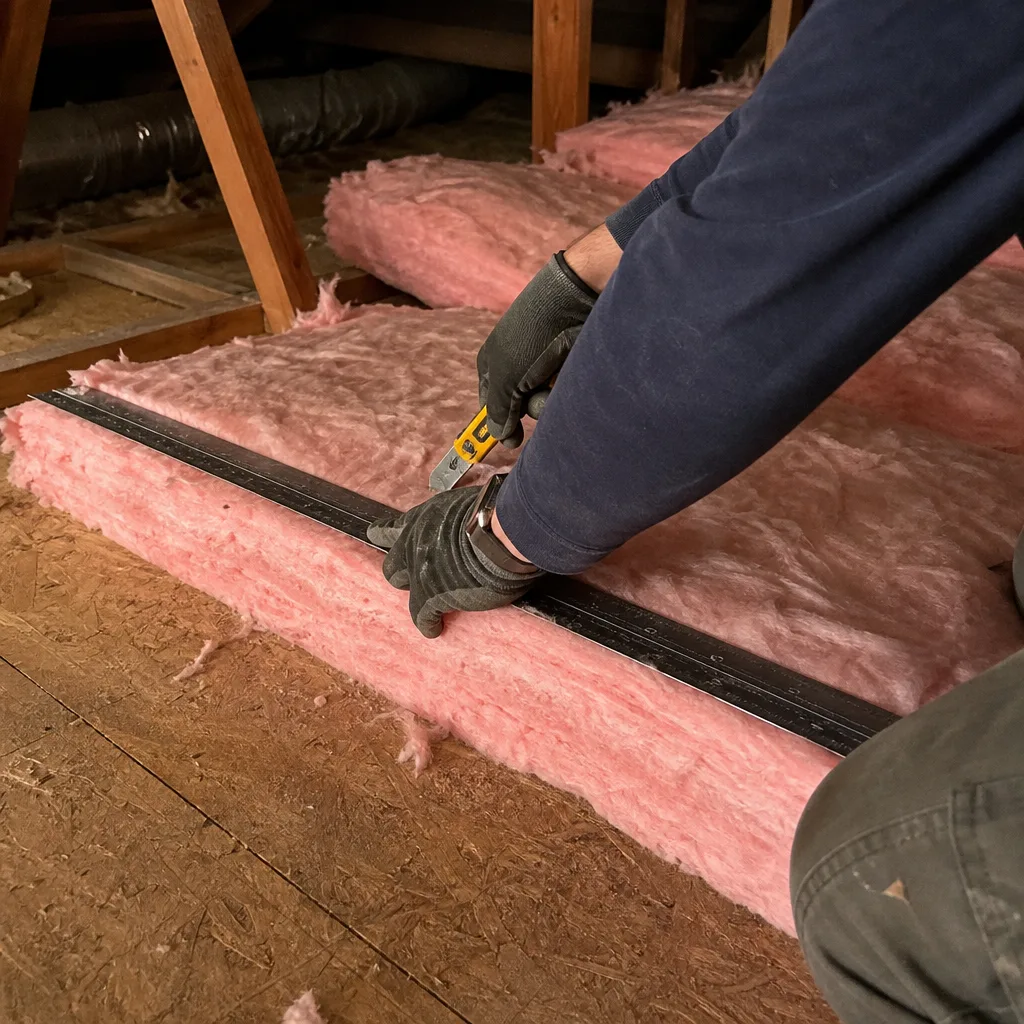
Radiant barrier works by reflecting heat rather than absorbing it. Rockwool’s product line, particularly their ComfortBatt and Safe’n’Sound lines, pairs well with a properly installed radiant barrier because the stone wool handles the conductive heat while the foil handles the radiant heat. When the foil layer fails, the stone wool takes on more work than it was sized for, and your cooling costs climb quietly month after month.
Which Rockwool Models This Applies To
Radiant barrier isn’t a Rockwool-specific part in the way a burner assembly belongs to a specific furnace model. It’s a foil-facing product that works alongside Rockwool insulation, and the compatibility question is about how the two layers interact. We regularly install radiant barrier over Rockwool ComfortBatt R-30 and R-38 batts in Ventura attics, and under or over Rockwool Safe’n’Sound in wall and floor cavity applications where radiant heat is a factor. The key spec to check is the barrier’s emissivity rating, which should be 0.05 or lower. Anything above 0.10 is doing very little for you, regardless of the brand name printed on the box.
One compatibility gotcha we see often: some radiant barrier products come with a perforated backing meant for use in humid climates. Ventura’s coastal air carries enough moisture that a non-perforated barrier can trap condensation against the Rockwool, leading to mold growth that voids the Rockwool warranty. We use perforated barrier products in nearly every Ventura installation for this reason. If you’re comparing quotes, ask whether the crew is installing perforated or non-perforated material. It’s a checkable detail that separates crews who know coastal attics from crews who don’t.
On the OEM-versus-aftermarket question: radiant barrier is a commodity product. Rockwool doesn’t manufacture radiant barrier under its own brand, so “OEM” doesn’t apply in the traditional sense. What matters is the spec, not the logo. We work with Reflectix and several other established manufacturers, and we match the emissivity rating and perforation pattern to your attic’s ventilation and moisture profile. If a salesperson insists one brand of foil is dramatically better than another, they’re selling you something other than the truth.
Signs Your Rockwool Radiant Barrier Installation Is Failing
- Sagging or drooping foil between rafters. The adhesive or staples that held the barrier have loosened, typically from heat cycling. The barrier loses contact with the air gap it needs to function, and its reflective value drops sharply.
- Tears along seams or around plumbing penetrations. Tradespeople working in the attic after installation often snag the foil. A tear wider than a few inches creates a thermal window where radiant heat pours through to the insulation below.
- White oxidation or dulling on the foil surface. In Ventura’s salt-adjacent air, low-grade foil oxidizes within a few years. Once the surface dulls, emissivity climbs and the barrier stops reflecting heat effectively.
- Radiant barrier wicking moisture or showing water stains. Non-perforated barrier installed in a coastal attic can trap humidity against the foil. Stains mean condensation is happening, and that moisture is migrating into your Rockwool batts.
- Upstairs rooms consistently 8 to 12 degrees warmer than the rest of the house. This is the symptom that finally gets people to call. By the time the temperature gap is that wide, the barrier has been underperforming for at least one full summer.
Replacement Cost & What’s Included
In Ventura, radiant barrier replacement over existing Rockwool insulation runs $3.25 to $4.75 per square foot installed. The range is driven by three things: attic accessibility, whether old barrier needs removal first, and whether your roof pitch requires any special working angles. A tight crawlspace attic with low clearance falls on the higher end. A walkable attic with a standard pitch falls on the lower end.
That price includes the barrier material, all fasteners, removal and disposal of the failed product, and a full day’s labor from our crew. We write the number down before we start, and the number on the invoice matches the number on the estimate. Every Alden Insulation Ventura installation is covered by the 365-Day Done Right Promise: if the work fails within a year, we return and make it right at no charge. That covers seam separation, fastener failure, or any installation defect. It does not cover new damage from a new leak or a tradesperson trampling through the attic, which is why we document every job with photos before we leave.
Key Takeaways
- Typical Ventura installation: $3.25 to $4.75 per square foot, all-in
- Written price before work starts, guaranteed for 365 days
- Perforated barrier recommended for Ventura’s coastal humidity
- Half-day job for most attics; same-week scheduling standard
DIY or Call Us?
Here’s the honest split. What you can safely do yourself: inspect the barrier. Climb into the attic with a flashlight on a hot afternoon and look for sagging, tears, and dulling. That diagnostic walk-through costs you nothing and tells you whether you actually need us. What you should not do yourself: the actual installation. Attics in Ventura regularly reach 130 degrees in summer, and working overhead with rolls of foil while balancing on joists is a legitimate hazard. One missed step puts a foot through the ceiling below, and then you’re paying for drywall repair on top of the barrier work. High-temperature attics also present heat exhaustion risk that most homeowners don’t plan for.
If you want to check things over before committing, call (341) 895-7513 and we’ll walk through what you’re seeing. If you’d rather hand the whole thing to a crew that’s in and out in a day with a written guarantee, call the same number. Either way, you get a real person on the line.
FAQs
A properly installed perforated radiant barrier over Rockwool insulation lasts 15 to 20 years in Ventura’s climate. The main lifespan killers here are salt air oxidation and improper installation that leads to tearing. If your barrier failed in under 10 years, it was either low-grade foil or poorly fastened. Call (341) 895-7513 and we’ll tell you what you’re looking at.
Small tears can be patched with foil tape if the surrounding barrier is still reflective and taut. But if the surface is dulled from oxidation or the barrier is sagging across multiple bays, patching is throwing money at a product that’s already done. We’ll give you an honest assessment either way. That’s how Bryce Holloway runs every job: measure the house, match the material, do the job right the first time.
Most Ventura attics take four to six hours from start to cleanup. Larger homes or attics that need old barrier removal first can run a full day. We arrive inside the scheduled window with a background-checked, uniformed crew, and we leave the attic cleaner than we found it.
Yes. Our trucks carry perforated radiant barrier in standard widths along with the fasteners and foil tape needed for a complete installation. That means most Ventura jobs are completed on the first visit, no waiting on a supply house order. If your attic requires a non-standard width, we’ll have it in hand within two business days.
Written by Bryce Holloway, Owner, Alden Insulation Ventura at Alden Insulation Ventura, serving Ventura and nearby areas.