
Knauf Attic Air Sealing: The Ventura Owner’s Guide
Knauf attic air sealing in Ventura typically runs $1,100 to $3,400 installed, depending on attic size, access difficulty, and how many bypasses need sealing. We stock Knauf-compatible sealants, can lights, and foam kits on the truck, and we can usually be in your attic within 48 hours. What usually brings a Ventura homeowner to this page is a specific frustration: they’ve already upgraded to Knauf insulation, but the upstairs rooms still feel drafty in the morning marine layer, or the AC runs harder than it should from June through October. The insulation is doing its job. The air sealing isn’t.
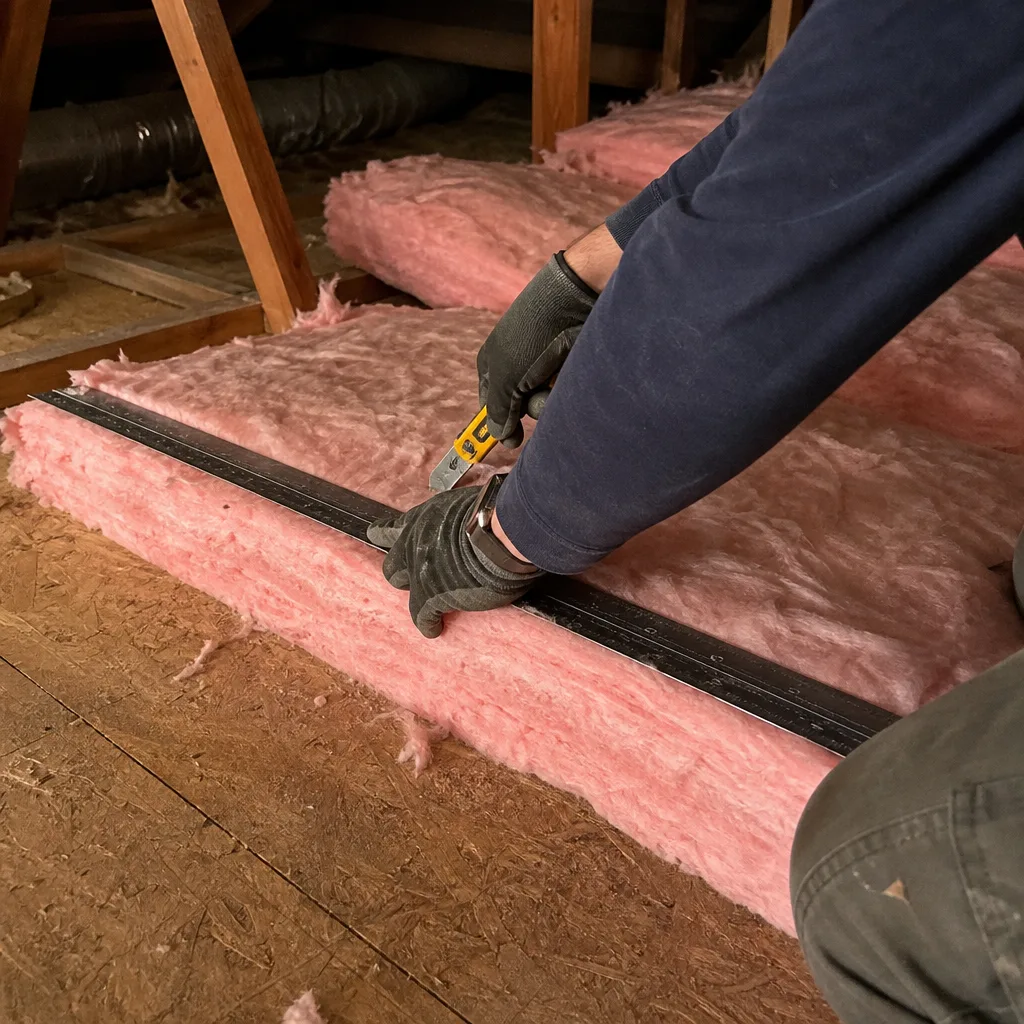
Which Knauf Models This Applies To
Knauf doesn’t sell air sealing as a single “part” the way they sell batts or blown-in fiberglass. What we’re actually working with is a system: Knauf EcoBatt, Knauf Insulation blown-in fiberglass, or Knauf Jet Stream Ultra paired with the sealing materials that make them perform to spec. The sealing components include foam gaskets for top plates, fire-rated can light covers, high-temperature caulk for flues and vents, and two-part spray foam for plumbing penetrations. If your attic has Knauf EcoBatt with ECOSE technology, the batts will typically be brown rather than the familiar pink or yellow, and the bag label will carry a Knauf product code ending in a series number like K-11 or K-13. That label matters. We match the sealant chemistry to the Knauf material rather than using whatever is cheapest on the shelf. Spray foam that off-gasses wrong against ECOSE binder can compromise what is otherwise a good insulation job. This is one of the compatibility gotchas we see in Ventura: a homeowner or a handyman uses an aggressive expanding foam that cures too hot against the Knauf batt facing, and the facing wrinkles and delaminates. We use low-exotherm foam for those applications.
On the OEM versus aftermarket question for Knauf: Knauf doesn’t manufacture caulk or can light covers, so there’s no true “OEM” sealant to buy. What matters is that the material meets the same fire-rating and expansion spec the assembly requires. We stock brands we’ve tested against Knauf installations and we’ll name them on the written estimate, so you can research them before you approve the work.
Signs Your Knauf Attic Air Sealing Is Failing
- Upstairs rooms feel 5 to 8 degrees warmer than downstairs on summer afternoons. Air sealing failures let conditioned air escape through ceiling penetrations while superheated attic air gets pulled into the living space. Insulation slows heat transfer, but it won’t stop air movement. That’s the sealing’s job.
- You can smell whatever’s in the attic, even faintly. Dust, old wood, or that dry fiberglass odor drifting into a hallway usually means a bypass around a ceiling fixture or top plate. Fiberglass doesn’t off-gas much, so if you smell the attic, air is moving through an unsealed gap.
- Bathroom exhaust fans seem weak or the kitchen hood doesn’t pull steam well. When an attic is over-ventilated due to failed sealing, the house depressurizes and exhaust fans compete with that pressure difference. The fan motor is fine; the envelope isn’t.
- You find drywall dust or fiberglass particles on ceiling fan blades near the upstairs hallway. That’s airborne attic material traveling through penetrations. Air sealing should stop that. If you’re seeing it, the original sealing job was thin or has pulled away.
- The upstairs AC runs constantly from July through September and the thermostat never quite hits the set point. In Ventura’s climate, many homes rely on open windows rather than AC, but inland neighborhoods like East Ventura and Saticoy get real heat. Unsealed attics leak cooled air straight up through the top plate.
Replacement Cost & What’s Included
For a typical Ventura single-story ranch with a standard attic hatch, running between 1,200 and 1,800 square feet, complete air sealing around the Knauf insulation package runs $1,100 to $2,200. Two-story homes and attics with low clearance or difficult access run $2,200 to $3,400. The price includes labor, all sealing materials, and disposal of any old, failed can light covers or deteriorated gaskets we pull out. What drives the range is how many penetrations your attic actually has: every can light, ceiling fan box, plumbing vent, flue chase, and top plate seam is a point that needs treatment. An attic with 8 recessed lights costs more to seal than one with 2, because fire-rated covers aren’t cheap and they take time to fit correctly around Knauf batts without compressing the insulation underneath.
Here’s the line-item breakdown we put on every written estimate:
- Top plate and seam sealing: $400 – $700 depending on linear footage and accessibility
- Recessed light covers (fire-rated, per fixture): $45 – $85 each including installation
- Plumbing and electrical penetration sealing: $150 – $350 depending on count
- Attic hatch weatherstripping and seal: $90 – $180
- Flue and chase sealing with high-temperature caulk: $120 – $280
Every job includes the written price before work starts and the 365-Day Done Right Promise in writing. If the sealing fails within that year, we come back and redo the work at no charge. No prorated nonsense. The second visit is free.
DIY or Call Us?
We’ll be straight about this. You can safely inspect your attic hatch, look for gaps around visible plumbing vents, and check whether the existing can light covers are still seated. That’s a Saturday morning job with a flashlight and a dust mask. What you shouldn’t do is get into two-part spray foam application without experience. Two-part foam kits cure hot, expand fast, and the chemicals demand proper ventilation and skin protection. Also, if you’re working in a Ventura attic in August, the interior temperature can exceed 130 degrees, and heat exhaustion is a real risk. We send up technicians who are background-checked, uniformed, and trained to work in those conditions with the right PPE. If you’ve already started a sealing project and it’s gone sideways, or you opened a foam kit and realized the gun is clogging, call (341) 895-7513 and we’ll sort it out. You don’t pay us to clean up a mess while we’re already up there doing the work right.
FAQs
Properly installed air sealing around Knauf insulation lasts 15 to 25 years in Ventura’s climate, with the caveat that can light covers may need replacement sooner if fixtures are swapped. Foam and caulk hold up well in a dry attic, which is what most Ventura homes have for most of the year.
Yes, if the failure is localized, like a single can light cover that popped off or a visible gap at a plumbing stack. We’ll patch it, test the area, and charge a service fee rather than a full project price. If the original sealing was thin across the whole attic, patching is throwing money at a losing game. Call (341) 895-7513 and we’ll tell you which situation you’re in after one look.
For a standard Ventura single-story home, we’re typically done in 4 to 6 hours. Two-story homes or attics with heavy existing insulation that we need to move and reset around Knauf batts can take a full day. You’ll have a written window before we arrive, not a vague half-day range.
Yes. We carry Knauf-compatible foam gaskets, fire-rated can light covers, high-temperature caulk, low-exotherm expanding foam, and weatherstripping for hatches. We also stock Reflectix radiant barrier for homeowners who want to add a thermal break alongside the sealing work. If your job needs a specialty item we don’t carry, we order it and schedule the install once it’s in our hands.
Written by Bryce Holloway, Owner, Alden Insulation Ventura at Alden Insulation Ventura, serving Ventura and nearby areas.