
Knauf Attic Insulation: The Ventura Owner’s Guide
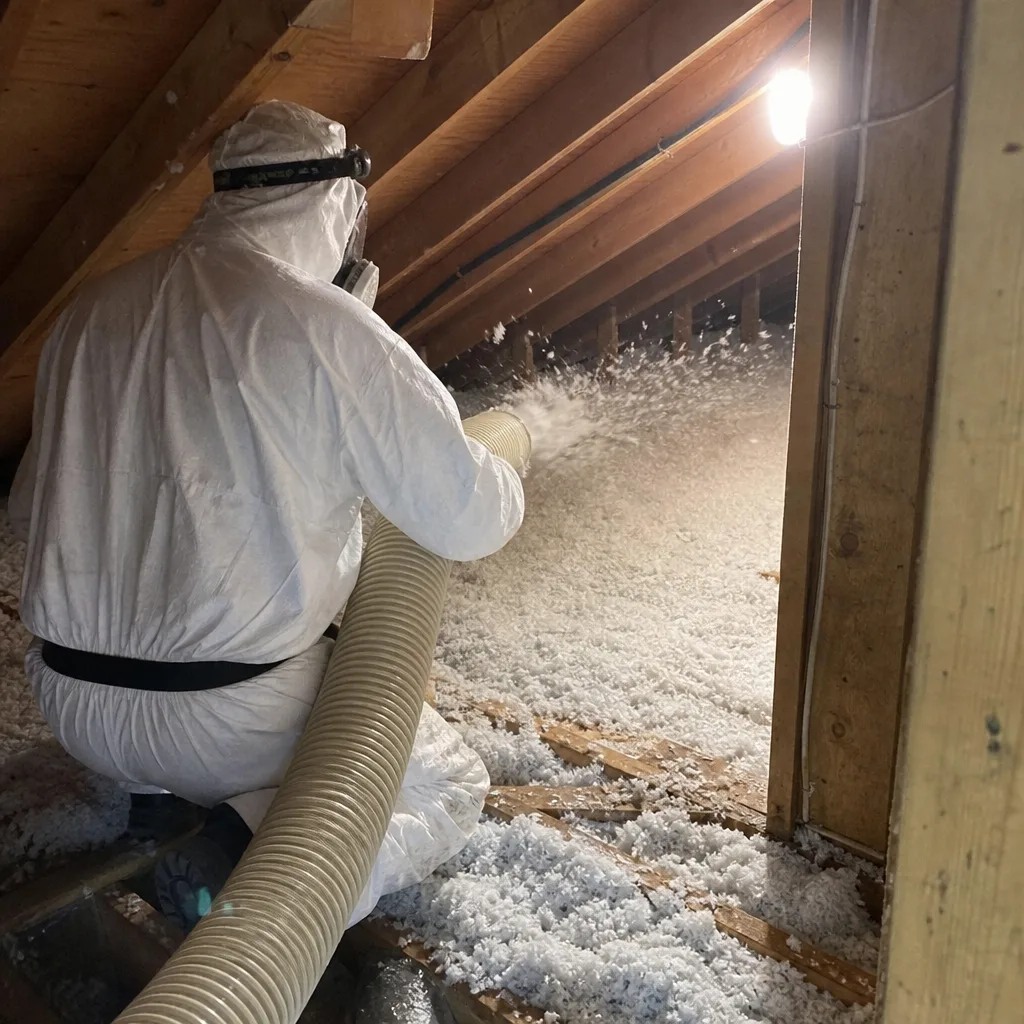
We stock and install Knauf attic insulation in Ventura, with most replacement or top-up jobs running $1,450 to $3,800 installed depending on square footage, current R-value, and whether removal is needed first. Same-day and next-day appointments are available for most Ventura homes, and we carry Knauf EcoBatt and Jet Stream products on the truck. Most homeowners discover the problem through a utility bill that climbs for no obvious reason, a bedroom that won’t hold temperature, or a pest inspection that reveals compressed or damaged batts. You don’t need to know the exact Knauf product code to get started; we match the material to the existing assembly when we arrive.
Key Takeaways:
- Knauf insulation in Ventura attics typically lasts 20 to 30 years before it needs topping up or replacement; failures before that are almost always moisture, rodent, or installation-related.
- We install Knauf EcoBatt R-30 and R-38, Knauf Jet Stream blown-in fiberglass, and Knauf R-13/R-19 for wall assemblies adjacent to attic spaces.
- Every job gets a written price before work starts and a 365-day written guarantee through the Done Right Promise.
Which Knauf Models This Applies To
The two Knauf lines we install most often in Ventura attics are EcoBatt (batt form) and Jet Stream (loose-fill blown-in). EcoBatt comes in R-13, R-19, R-30, and R-38; Jet Stream is specified by target R-value rather than a fixed product number. If you’re replacing a section and want to know what you have, look for the printed facing on the batt itself. Knauf stamps the R-value and product code on the kraft facing, usually within six inches of the end. If the facing is gone or unreadable, we measure the batt thickness: R-30 fiberglass runs around 9.5 inches, R-38 around 12 inches.
One compatibility detail that catches Ventura homeowners off guard: Knauf EcoBatt changed its width specification in the mid-2010s. Older batts were friction-fit at 15.25 inches for a 16-inch on-center cavity; current EcoBatt is 15 inches exactly. If you have a pre-2015 Knauf install, squeezing a new off-the-shelf batt into the old bay can leave a gap at the edges. We adjust for that on site rather than forcing a bad fit. On the OEM versus aftermarket question: for attic top-ups, any fiberglass batt or loose-fill that hits the same R-value per inch will perform equivalently. What matters more is the installed density and coverage; a sloppy install of the right material underperforms a careful install of a generic one. We use Knauf products because they’re consistent, but the guarantee we write covers the finished R-value, not the brand label.
Signs Your Knauf Attic Insulation Is Failing
- Upstairs rooms run 6 to 10 degrees warmer than the rest of the house in summer. That gap means the attic insulation has compressed or shifted, and the ceiling assembly is absorbing heat the insulation should be slowing. In Ventura’s inland zones, where summer attic temps hit 140°F regularly, this shows up first in rooms directly under the roof deck.
- Your energy bill is up 15 to 25 percent year-over-year without a weather change. Fiberglass loses effectiveness when it gets damp or matted down. Even a small roof leak, common after Ventura’s winter storm lines, can flatten a section of Knauf batt and cut its R-value by a third or more.
- You can see dark streaks or staining on the kraft facing from the attic side. That means moisture has been moving through the assembly. Once the facing is compromised, the batt isn’t doing its vapor-control job either.
- You hear scratching or find tunnels through the insulation. Rodents nest in fiberglass; they chew through the facing and hollow out runs. Knauf batts don’t deter them any more than other brands, and once they’ve tunneled, the thermal break is gone along those paths.
- Dust or fiberglass particles are collecting around ceiling fixtures or attic access doors. This is a sign the batts above are degrading or were disturbed. It also usually means air sealing around those penetrations was never done, so the insulation is being bypassed entirely.
Replacement Cost & What’s Included
In Ventura, a full attic insulation replacement with Knauf products runs $1,450 to $3,800 for most homes up to about 1,800 square feet of attic floor. A top-up (blowing Jet Stream over existing but thin insulation to bring it from R-19 to R-38) runs $950 to $1,600. Removal of old, damaged, or rodent-soiled insulation adds $500 to $1,200 depending on attic depth and access. These numbers include labor, material, disposal, and air sealing around the main ceiling penetrations: plumbing vents, recessed light housings where rated, and the attic hatch.
What drives the range: attic square footage, the R-value you’re targeting, whether the existing insulation can stay or has to come out, and access conditions. A Ventura hillside home with a low-slope roof and a 22-inch access hatch costs more than a standard single-story with a pull-down stair. We give you the written price before any work starts, and the number you approve is the number on the invoice. The work is covered by the 365-Day Done Right Promise: if the installed insulation fails to perform within a year, we return and fix it at no charge.
DIY or Call Us?
You can safely check your own attic: look for compressed or shifted batts, feel for drafts around ceiling fixtures on a windy day, and note any areas where the insulation is visibly thinner than the rest. That tells you whether you have a problem and roughly where. What’s not a DIY job is a full removal, or any work in an attic with vermiculite, knob-and-tube wiring, or active rodent activity. Loose-fill fiberglass can hide electrical hazards, and working in a hot Ventura attic without ventilation and knee boards is how people end up through a ceiling.
The middle path: we can come out, inspect, and tell you what actually needs doing. Some attics need a full replacement; plenty just need air sealing and a top-up. If you’re not sure which one yours is, call (341) 895-7513 and we’ll take a look.
FAQs
Knauf fiberglass batt insulation lasts 20 to 30 years in a Ventura attic when it stays dry and undisturbed. The material itself doesn’t break down; what shortens its useful life is moisture from roof leaks, compression from storage or foot traffic, and rodent activity. If your insulation is older than 20 years, a top-up usually makes more sense than a full replacement.
Yes, in sections. If one area is water-damaged or rodent-soiled, we can cut out the affected batt and replace just that bay without touching the rest. What can’t be repaired is widespread compression or contamination; at that point, removal and reinstall is the honest fix. Give us a call at (341) 895-7513 and we’ll tell you which situation you have.
A standard Ventura attic top-up takes 3 to 4 hours; a full removal and replacement takes 1 to 2 days depending on square footage and access. We schedule inside a specific window, not a half-day range, and the technicians who show up are background-checked and in uniform.
We stock Knauf EcoBatt R-30 and R-38 and Knauf Jet Stream loose-fill on our service vehicles, so most Ventura jobs can start the day we arrive. We also carry Reflectix for radiant barrier applications where the attic calls for it. If your project needs a product we don’t have on hand, we’ll quote the lead time in writing before you commit.
Written by Bryce Holloway, Owner, Alden Insulation Ventura at Alden Insulation Ventura, serving Ventura and nearby areas.